🦊ALLEGED VENEZUELAN TERROR GANG ACCUSED OF DRAINING $40.7 MILLION FROM U.S. ATMs AS ICE HAULS IN 54 SUSPECTS 😱

🦊“THIS WAS COORDINATED AND CALCULATED”: MᴀssIVE ICE RAID ROCKS MULTIPLE STATES, ATM NETWORKS COMPROMISED, AND A STORY AUTHORITIES ARE TELLING IN PIECES 🚨
Minnesota, Nebraska, and parts of the Midwest woke up this week thinking it was just another polite morning of snow shovels, H๏τdish leftovers, and people apologizing for breathing too loudly — and then reality slapped them awake with the subtlety of a SWAT team kicking down a door.
According to law enforcement, a Venezuelan gang allegedly linked to terrorism — yes, real-life terrorism, not one of those Netflix scripts — allegedly stole a staggering $40.7 million from U.S. ATMs.
And if that number doesn’t make your jaw drop, the reported one million fentanyl pills hidden alongside the cash certainly will.
It’s the kind of story that sounds like someone’s overcaffeinated fever dream: a transnational criminal network turning ordinary ATMs into cash-spitting slot machines while federal agents quietly pieced together a web so tangled it would make a season of Breaking Bad look like a lemonade stand.
The irony? Most people in the affected states were still trying to figure out how to get their morning latte without waiting 20 minutes.
How Do You Steal $40 Million From Machines Nobody Watches?
Apparently, the gang used a technique called “ATM jackpotting,” which is exactly what it sounds like: convincing automated teller machines that it’s payday… for someone else.
Investigators allege that malware and physical manipulation were deployed across multiple states, and insiders say these alleged thieves allegedly turned ATMs into literal money fountains.
They didn’t swipe a card or sneak in through the back door.
They allegedly made the machines obey them like obedient robots programmed to obey chaos.
Neighbors of the raids were stunned.
“I thought I lived in a quiet town,” one local said.
“Now I wake up to SWAT trucks, flashing lights, and news helicopters.
I mean, I just wanted my coffee.”
Fake “experts” were quick to appear, naturally.
One self-described “Cybercrime Futurist” declared, “This is the dawn of cartel automation.
ATMs are the new bank vaults.”
Another livestreamed expert, whose credentials appear to be “very confident in front of a camera,” claimed, “This proves cartels are more creative than Wall Street.”
Both statements are equally terrifying and equally unverifiable, which of course only fueled the frenzy online.
The Plot Thickens: Terror Gang, Cash, Pills, and Ice Cream Trucks (Probably)
The alleged gang behind this operation reportedly isn’t your run-of-the-mill street crew.
Venezuelan crime syndicates like Tren de Aragua are alleged to have deep transnational ties, from extortion and kidnapping to drug trafficking and money laundering.
Authorities say the group allegedly funneled stolen funds into other operations, possibly funding activities that make even hardened crime reporters shudder.
Meanwhile, the fact that the operation allegedly occurred in the quiet, polite heartland of America makes it feel all the more cinematic.
Who knew that under the snowbanks and youth soccer leagues lurked international crime?
Online, Minnesotans and Nebraskans began rethinking every friendly wave from a neighbor, every family-owned strip mall, and even the local high school bake sale.
Was that chocolate cake innocent? Or coded signals for illicit cash transfers? Nobody knew, but suddenly, paranoia was the new polite greeting.
The Arrests: 54 Allegedly Caught Red-Handed
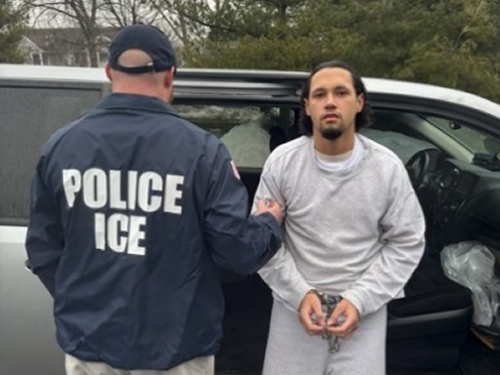
ICE and FBI agents reportedly executed coordinated raids that resulted in 54 arrests.
That’s right — 54 people allegedly involved in turning U.S. ATMs into automated cash machines.
Law enforcement officials described the operation as meticulously planned, months in the making, and extraordinarily complex, which is legal-speak for “these people allegedly knew exactly what they were doing and somehow evaded detection for years.”
Authorities emphasized that the arrests targeted a combination of money launderers, technicians allegedly manipulating ATMs, and other alleged co-conspirators.
The spectacle of armored vehicles, executed warrants, and terrified suspects instantly transformed sleepy neighborhoods into what looked like an action movie set — minus the slow-motion bullet-dodging scenes, sadly.
The Public Reacts — And Memes Explode
As news broke, social media predictably erupted.
Memes ranged from the painfully literal (“ATMs: 1 / Banks: 0”) to the wildly conspiratorial (“If my neighbor wears a hoodie tomorrow, I’m calling the FBI”).
One viral comment read, “I always wondered why my local ATM looked a little too happy dispensing cash… now I know.”
Conspiracy theories flourished like weeds.
Some insisted this was just the tip of the iceberg, and that similar schemes were running in every state, waiting to be exposed.
Others speculated that ATMs might start defending themselves, imagining machines that spray ink or call 911 on users who try to withdraw more than $20.
While fanciful, these comments reflect the mix of horror and fascination Americans feel when confronted with sophisticated crime operating in plain sight.
Politicians Join the Fray — And Nobody’s Happy
Naturally, no national-level heist goes unnoticed by elected officials.
Politicians quickly weighed in, promising more oversight, task forces, and very serious acronyms that everyone ᴀssumes mean something important.
One senator solemnly compared the thefts to cyberterrorism, while a representative warned that “this could affect your retirement funds, your children, and possibly your neighbor’s cat.”
None of this was fact-checked, but it felt dramatic.
Meanwhile, law enforcement ᴀssured the public that this was a financial and cybercrime investigation, not a random street violence alert.
Residents were politely told there’s “no ongoing threat to the community,” which is probably true — unless, of course, you count existential dread about trusting ATMs ever again.
Fake Experts Weigh In Again — Naturally

As with every modern crime spectacle, self-proclaimed experts appeared almost instantly:
Professor of “Criminal Innovation Studies” declared, “This is the first real example of automation meeting organized crime — humanity should take notes.”
Social Media Crime Analyst claimed, “The gang’s success shows banks are just failing to upgrade their infrastructure.”
Anonymous Redditor theorized, “They probably hid the cash in plain sight inside ice cream trucks.”
Each statement added fuel to the fire, despite zero verifiable evidence.
And in the tabloid ecosystem, confident nonsense is the currency of choice.
The Drama: Money, Pills, and Alleged Terror Ties
The $40.
7 million allegedly stolen was not the only shocking part.
Investigators reportedly found fentanyl pills in mᴀssive quanтιтies, which raised alarms about public health risks, drug trafficking, and the terrifying efficiency of modern crime syndicates.
One anonymous source allegedly said, “They weren’t just stealing cash.
They were building an empire that spans from ATMs to organized narcotics networks.
” The quote is dramatic, scary, and possibly slightly exaggerated — perfect for internet virality.
The alleged links to Venezuelan terror networks also ensure that this story remains politically and internationally charged.
The FBI and ICE framed the operation as a multi-jurisdictional crackdown on sophisticated crime, signaling that authorities are capable of tackling transnational cybercrime while the public stares, slack-jawed, at headlines like this.
Minnesota and Nebraska: Now Officially the Setting of a Crime Thriller
Suddenly, quiet towns with snow-covered lawns, local diners, and politely nodding neighbors are the backdrop for what could be described as the Midwest’s first blockbuster crime saga.
Overnight, residents are asking whether their bank is “safe,” whether their neighbor is secretly Venezuelan mafia-adjacent, and whether every single ATM they encounter is plotting against them.
The internet isn’t helping.
Every detail, real or imagined, is being circulated, dissected, and meme-ified: pH๏τos of raided businesses, stock images of cash-stuffed envelopes, dramatic “FBI in action” GIFs, and speculative TikToks alleging everything from secret tunnels to laser-triggered ATM vaults.
The Takeaway — Modern Crime is Loud, Complicated, and Inescapable
Here’s the harsh reality: sophisticated crime is increasingly digital, fast, and networked.
Allegedly.
Bank machines can be tricked.
Malware exists.
Money can disappear before anyone notices.
And while courts will eventually sort fact from accusation, the spectacle has already imprinted itself on the national consciousness.
Federal authorities have promised transparency, indictments, and ongoing investigations, but for the public, the story is already complete in the mind’s eye: 54 arrests, $40.7 million allegedly stolen, one million fentanyl pills allegedly stashed, and a Venezuelan terror gang allegedly laughing somewhere in cyberspace.
And the truth? Somewhere in between.
The legal system will take months, maybe years, to untangle all the allegations, verify culpability, and recover stolen funds.
But the headlines, memes, and tabloid speculation will continue — because this is the type of story that doesn’t quietly fade away.
Conclusion — America’s ATMs Never Looked So Dangerous
So, what happened in the end? Allegedly, a sophisticated criminal network turned routine financial infrastructure into a crime playground.
Allegedly, millions of dollars and a mountain of fentanyl were allegedly moved with efficiency that would make corporate CEOs blush.
Allegedly, law enforcement responded with raids, arrests, and dramatic statements.
For the public, the takeaway is simpler: the quiet Midwest is no longer just lakes, polite smiles, and H๏τdish — it’s a place where international crime, cyber heists, and dramatic raids can happen in broad daylight.
And while courts will sort the truth from allegation, the story will live on in headlines, memes, and every slightly paranoid thought before you insert your card into an ATM again.
Because when a Venezuelan gang allegedly steals $40.7 million from American ATMs, the polite Midwestern morning is officially over.
✓ admin
🦊“THIS WAS COORDINATED AND CALCULATED”: MᴀssIVE ICE RAID ROCKS MULTIPLE STATES, ATM NETWORKS COMPROMISED, AND A STORY AUTHORITIES ARE TELLING…